Kasa KP125M Matter Smart Plug (2-pack)
Matter-enabled indoor appliance monitoring, rated 15A/1,800W. A useful baseline for daytime loads, not a meter or approval for solar backfeed.
View on Amazon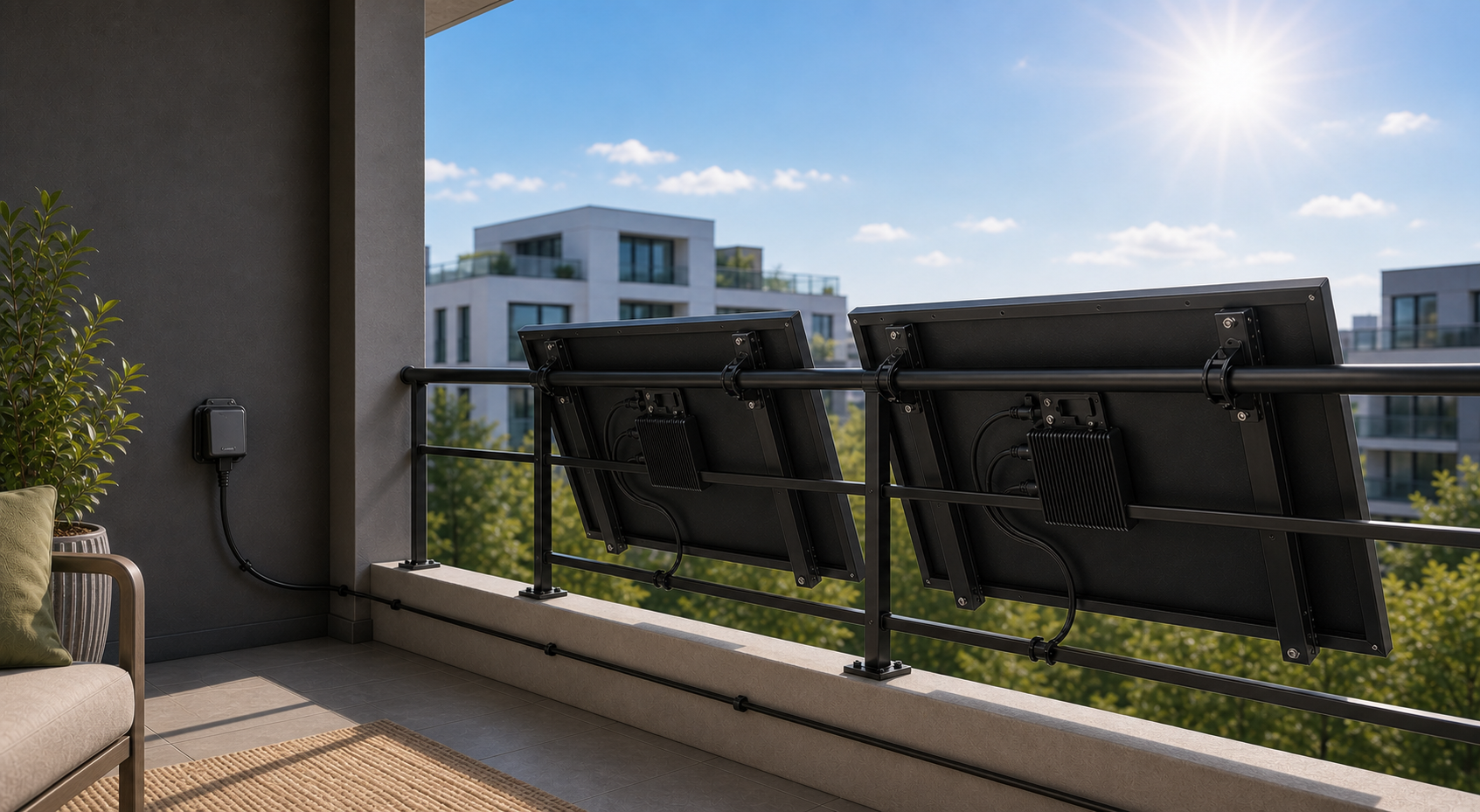
Balcony solar industry overview
States are starting to write clearer rules for small solar systems that mount on balconies, decks, patios, and railings. BalconyWatt tracks why the category matters, where policy is moving, and when the equipment is worth a serious look.
Start with a meter, choose panels that fit your space, and match them to the right power system. Portable batteries power appliances directly; they are not outlet-connected solar generators. For a grid-connected kit, check your state and the exact equipment requirements first.
Matter-enabled indoor appliance monitoring, rated 15A/1,800W. A useful baseline for daytime loads, not a meter or approval for solar backfeed.
View on AmazonWhole-home monitoring, with optional branch-circuit sensors. The base listing does not include a full 16-sensor kit. Electrical-panel installation needs qualified help.
View on AmazonA simple plug-in meter for checking appliance draw and building a realistic daily load profile before sizing solar.
View on Amazon1,024Wh storage and 2,000W AC output for appliances, with up to 600W solar charging. Compact, but not expandable. Never backfeed a household outlet.
View on AmazonUseful for portable power stations, patio testing, and checking whether a sunny site is worth a more permanent setup.
View on AmazonTwo 200W rigid panels for mini-rooftop, shed, patio, and larger small-space layouts. Match voltage/current to the inverter.
View on Amazon1,024Wh storage, 1,800W AC output and two solar inputs rated up to 1,000W combined. Expansion support is useful; panels and extra batteries cost more.
View on AmazonA four-piece fixed-surface bracket set intended for 50-150W panels. Not a balcony clamp or a default match for the 200W panels above; verify size and structural loads.
View on Amazon20ft, 10AWG DC extension pair. Use only if the equipment maker permits this connector pairing and cable rating; similar-looking connectors are not automatically compatible.
View on AmazonWhy consumers are paying attention
Traditional rooftop solar can be expensive, permanent, and hard for renters or condo owners to access. Balcony solar is smaller and more modular: a panel, microinverter, mounting path, monitoring, and sometimes a battery. The appeal is not replacing the grid; it is offsetting everyday daytime loads with equipment a household can understand before committing to a full roof project.
Smaller systems let buyers test solar economics without a roof lease, full array, or major construction project.
Production is modest, but it can reduce grid draw during sunny hours when refrigerators, laptops, fans, and chargers are running.
Where rules allow it, the equipment can be sized around a balcony, patio, deck, shed, or small home energy experiment.
States are moving from silence and utility-by-utility ambiguity toward defined equipment, safety, and interconnection paths.
The industry shift
Balcony solar is growing because it answers a practical gap in the U.S. energy market: millions of renters, condo owners, and small-space households want some solar access, but conventional rooftop systems are not always available to them. Our September 30, 2026 review tracks nine enacted state pathways, five pending jurisdictions including DC, and 21 states with stalled proposals or next-session watch items. The policy work is increasingly focused on safe system sizes, inverter behavior, utility notice, and installation responsibilities.
For consumers, the investment case is strongest when the site has direct sun, electricity rates are high, daytime self-use is realistic, and local rules give a clear path. It is weakest when the balcony is shaded, landlord or HOA rules are unclear, or the system depends on questionable outlet, circuit, or export claims.
The category makes solar visible to people who cannot alter a roof, take on a large loan, or wait for a full installer project.
The policy work is about standardizing listed equipment, anti-islanding, export limits, dedicated circuits, permits, and utility notification.
A balcony kit will not power a whole house, but it can offset small always-on and daytime loads when production lines up with consumption.
Batteries, smart meters, and app monitoring are turning the category into a practical way to understand household energy habits.
Build the system in pieces
A balcony or mini-rooftop setup is a system: panels, inverter, mounting, monitoring, and sometimes storage. Use these shortlists to compare each part before deciding whether a complete kit or a custom setup makes more sense.
Complete kit path
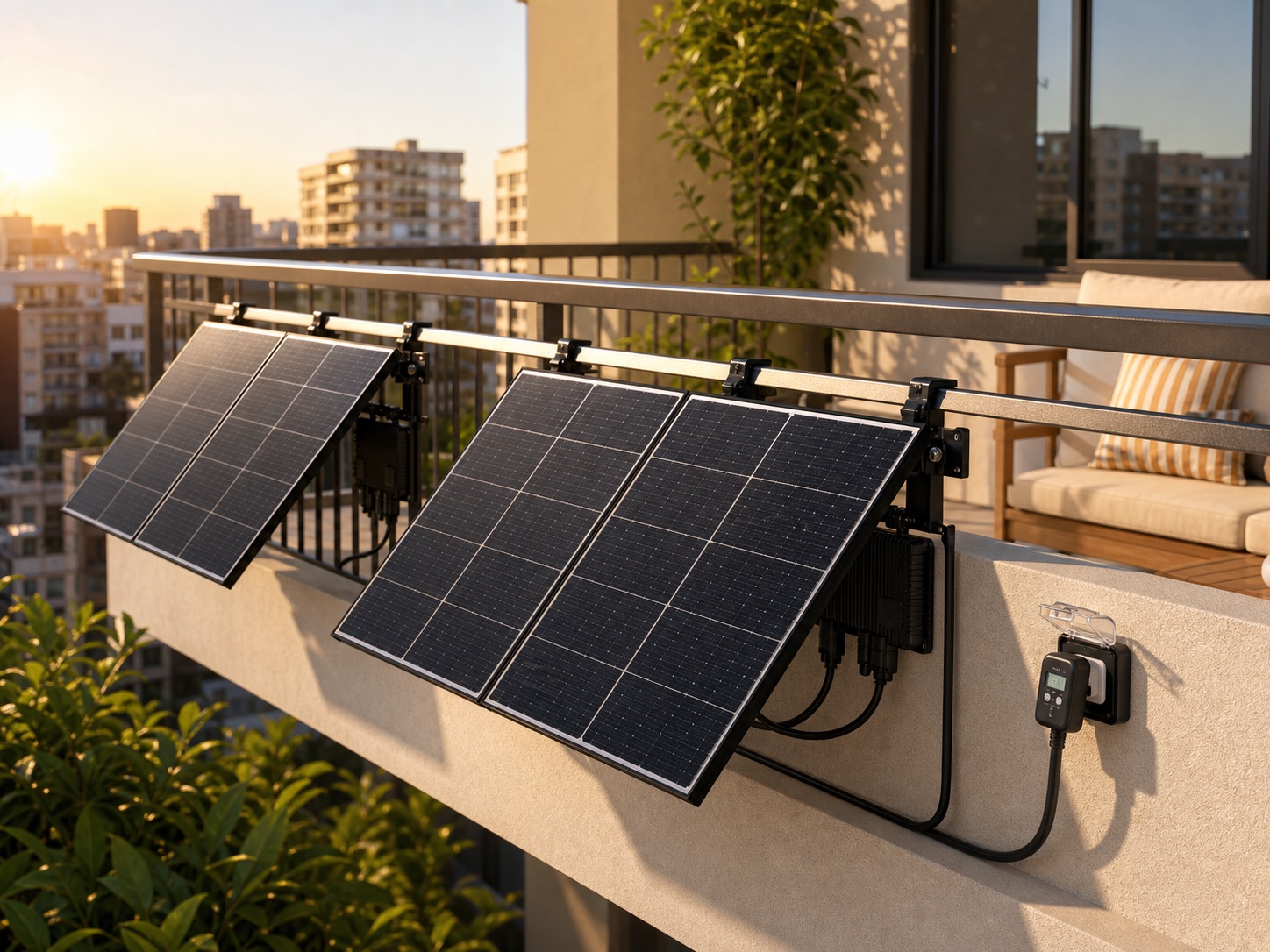
Start here if you want one manufacturer to define the panel, inverter, cable, monitoring, and mounting path. A kit still needs local electrical, utility, landlord, and HOA review.
Four 200W panels, two matched inverters and a PowerMeter simplify component matching. Confirm the exact listing and local acceptance; zero-export is not a universal exemption from rules.
View productA microinverter-led system with app monitoring. Its U.S. page names Utah, Maryland and Colorado, but some footnotes still restrict installation to Utah. Ask EcoFlow to confirm your location and current availability.
View productOne or two 180W glass-free panels with a Hoymiles inverter. The seller expects mid-October shipping and excludes Alaska, Hawaii, Maine, New York and Vermont. Member pricing requires membership. Whole-kit certification is still pending; shipping eligibility does not establish installation permission.
View kit and delivery details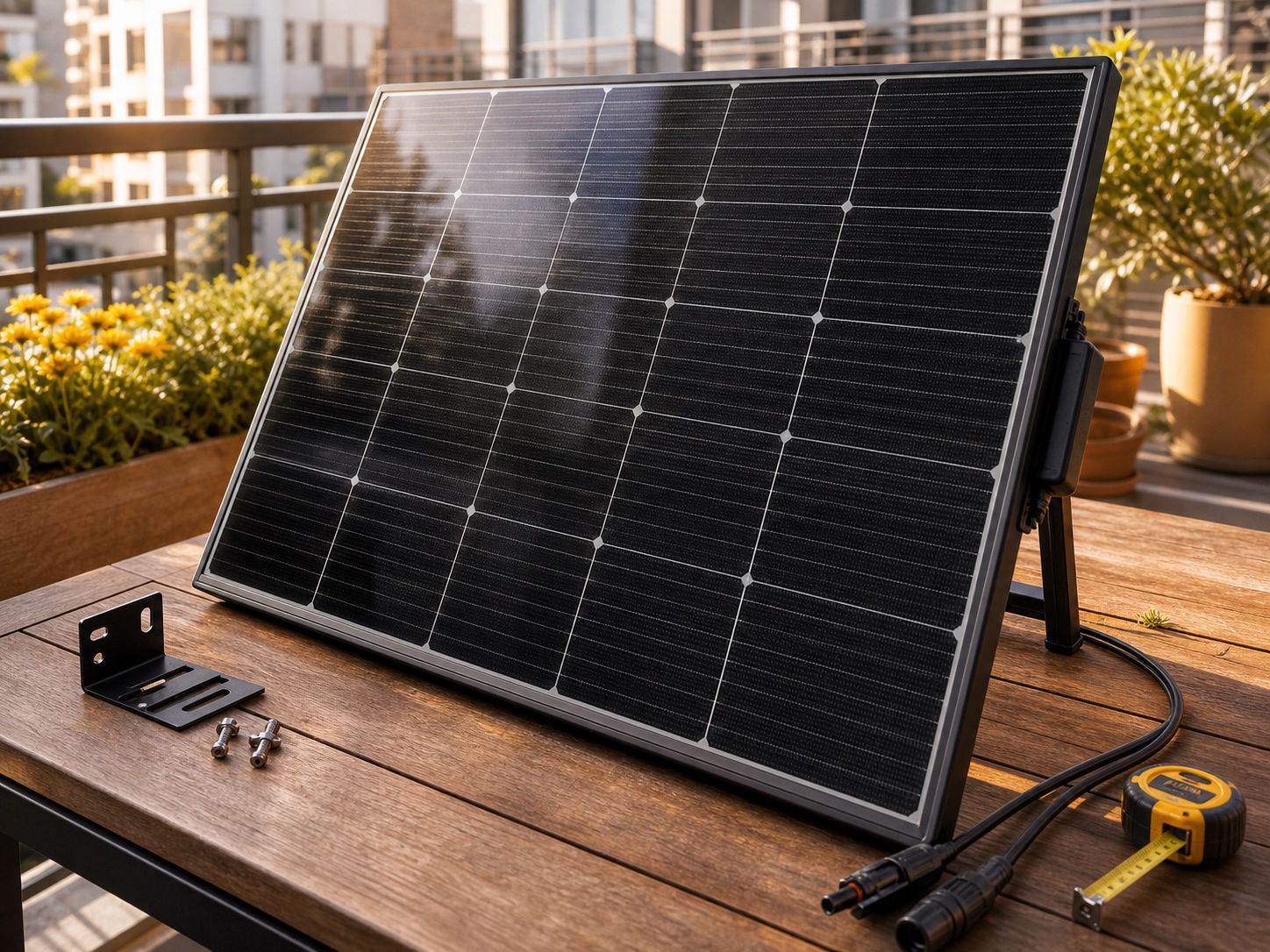
Solar panels
Panel choice comes down to physical size, weight, output, connector type, and whether the voltage/current window matches the inverter or battery input.
Two compact 200W rigid panels for mini-rooftop, shed, patio, and larger small-space layouts.
View on AmazonGood to compare for small two-panel layouts, battery charging, and places where panel dimensions are the hard limit.
View productBetter for portable power stations, patio tests, and temporary sun checks than permanent balcony rail mounting.
View on Amazon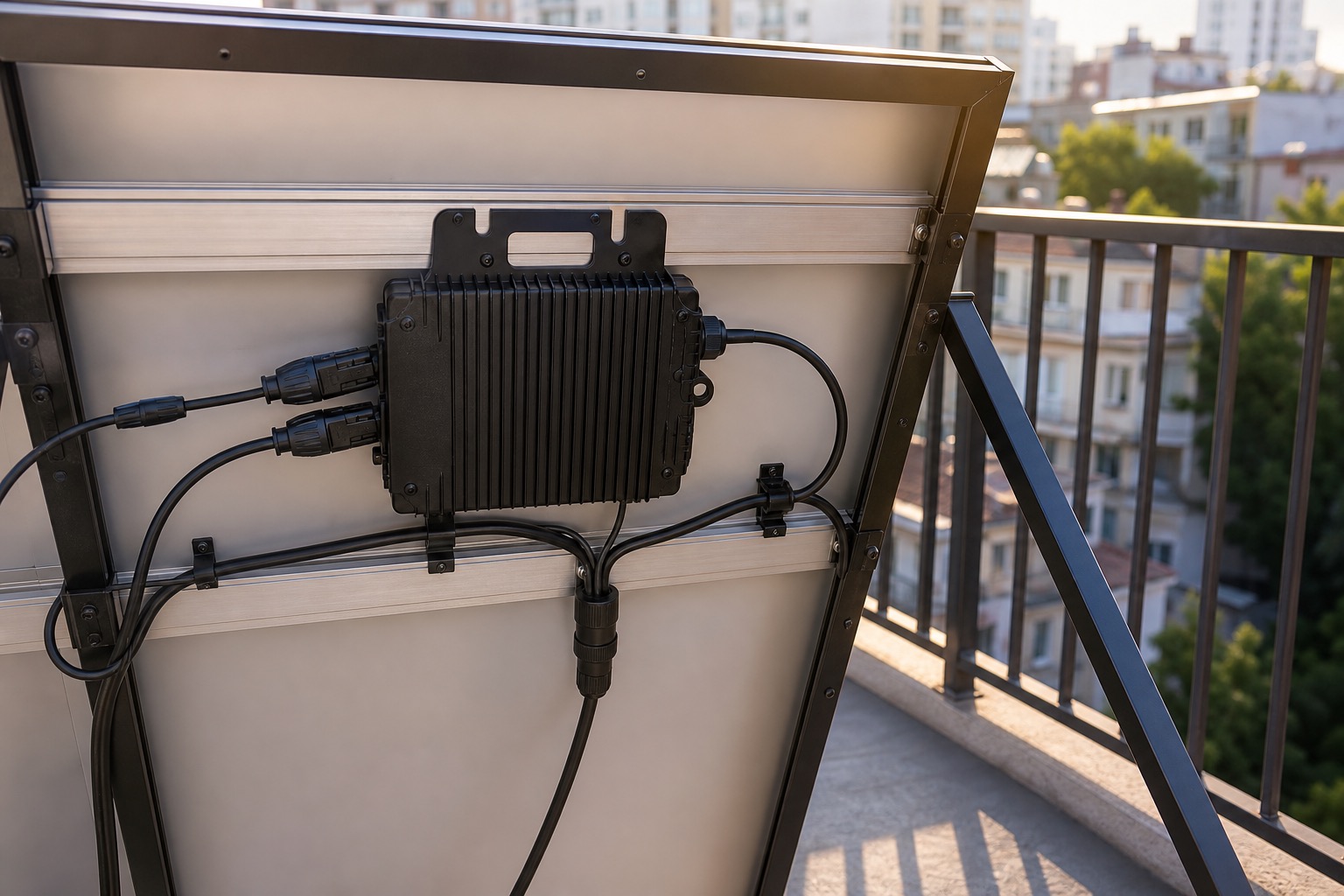
Inverters and microinverters
The inverter determines how DC panel output becomes usable AC power. This is where anti-islanding, listing, utility rules, and export behavior matter most.
App-monitored grid-tied inverter with anti-islanding. Its U.S. documentation lists 16-60V and up to 14A per PV input. Confirm cold-weather open-circuit voltage, local eligibility and current availability.
View productA mature rooftop microinverter reference for permitted small arrays; not a casual plug-in outlet product.
View manufacturer specificationsA new 360-500W U.S. range with anti-islanding and app monitoring. Hoymiles reports UL 3700 compliance for the inverter; this is not proof that any panel-and-cable combination is a certified whole system. Buy through an authorized kit supplier and check local requirements. No outage backup.
View manufacturer specifications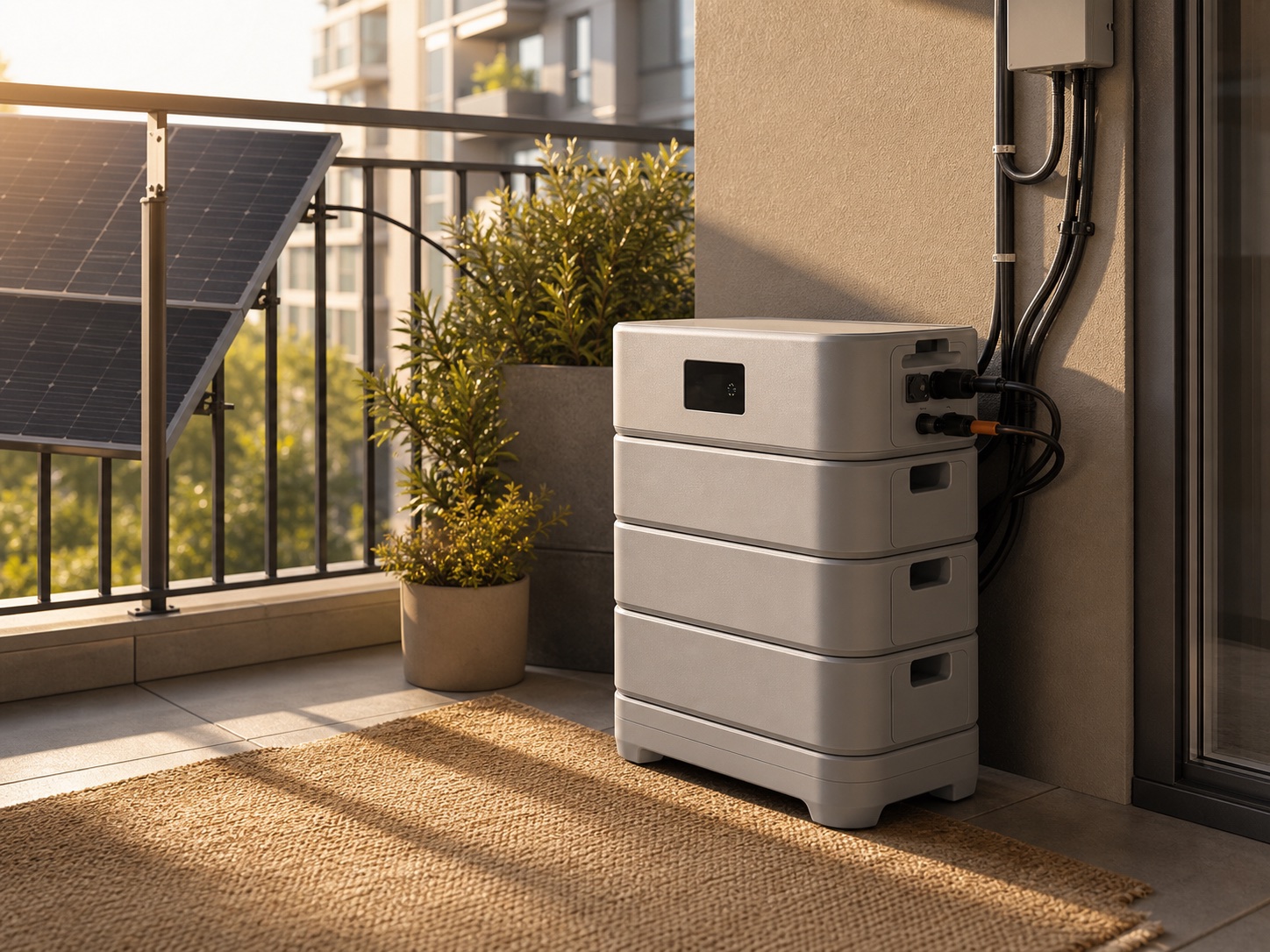
Batteries and storage
Portable stations power appliances from their own sockets; matched grid-connected storage works differently. Never connect a battery output to a wall outlet. Confirm input voltage, weather protection and the intended connection path.
1,024Wh LiFePO4 storage, 2,000W AC output and 600W maximum solar input. Good for direct appliance use; capacity cannot be expanded and it does not feed household wiring.
View on AmazonWorth tracking if you are already comparing the CraftStrom plug-in kit and want a matched storage path.
View productDual solar inputs and optional expansion are useful when you have more panel space. Its 1,024Wh base capacity still limits overnight runtime. This portable station is not compatible as a STREAM microinverter battery.
View on Amazon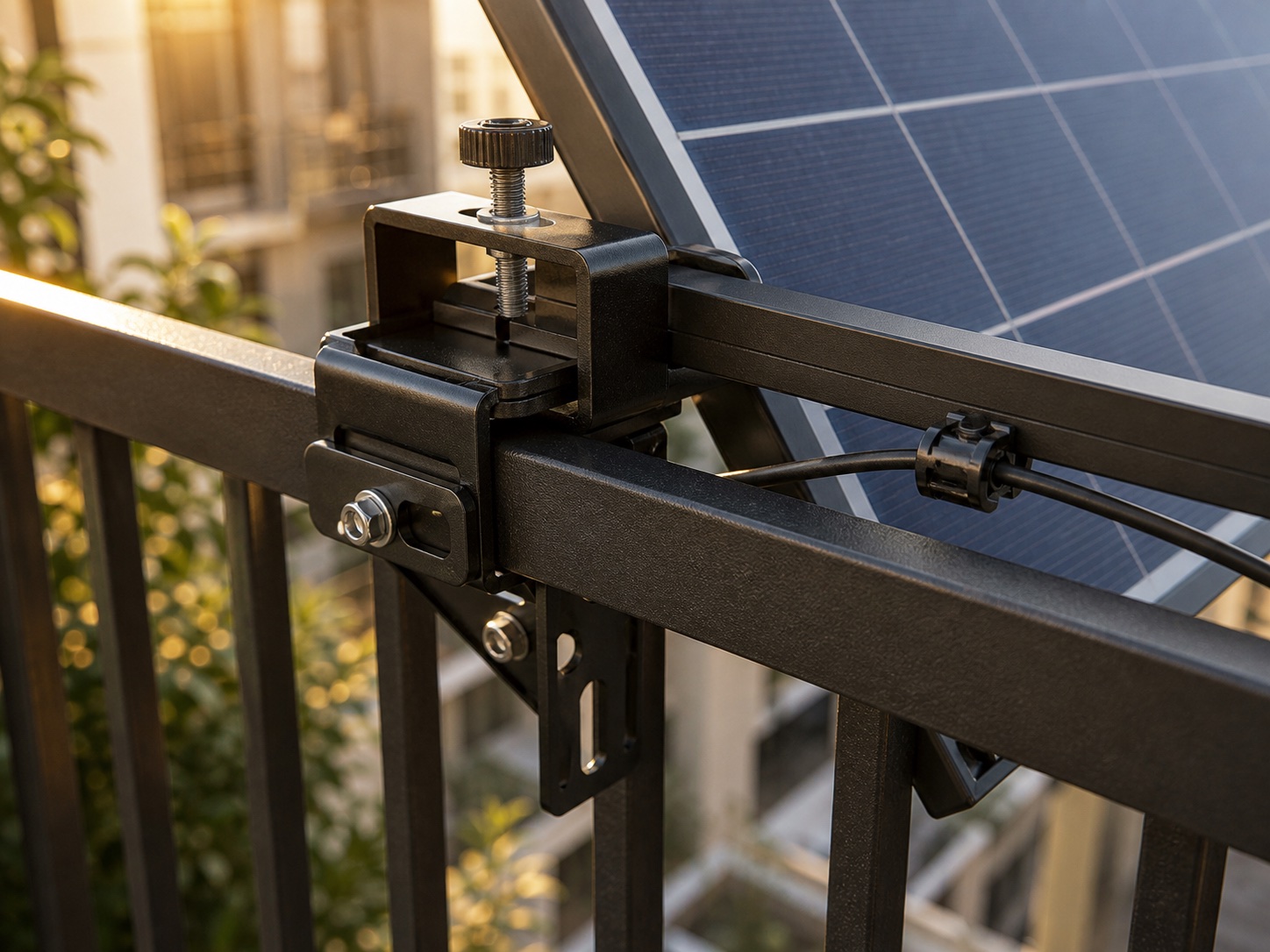
Mounting and structure
Balcony mounting needs extra scrutiny: railing geometry, wind exposure, fall risk, landlord rules, waterproofing, and whether the panel can be removed without damage.
A useful hardware reference for clamp concepts, but not a universal balcony rail solution.
View productA fixed-surface set intended for 50-150W panels. It requires appropriate fasteners and a load assessment; do not assume it suits a balcony rail or larger panel.
View on AmazonWhen buying a complete kit, prefer the tested mounting path and ask for wind-load, rail-fit, and removal documentation.
View kit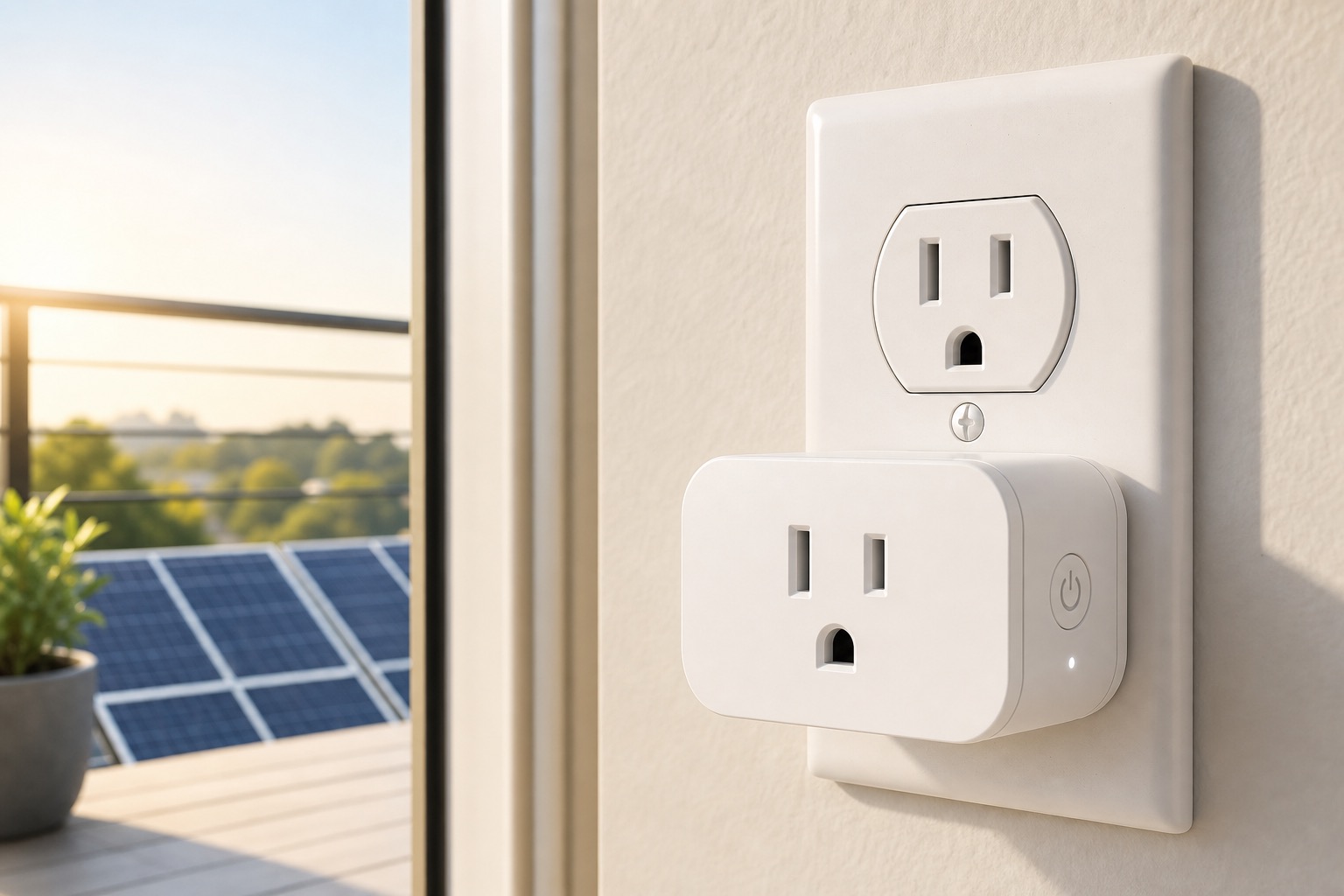
Monitoring and controls
Monitoring helps turn a gadget into a savings decision. Separate load monitoring from solar production monitoring, and do not assume an ordinary smart plug is approved for grid-feed measurement.
Matter support and energy tracking make this a useful indoor load monitor. Respect the 15A/1,800W rating; it is not designed to establish safe solar backfeed.
View on AmazonWhole-home readings help match daytime solar to demand. Branch-circuit detail needs additional sensors; the system uses Emporia cloud services and requires electrical-panel installation.
View on AmazonSimple appliance draw checks before sizing panels, batteries, or a monitored solar setup.
View on AmazonResearch library
Learn how plug-in solar systems, microinverter kits, and battery-backed packages compare for apartments, condos, and townhomes.
Compare storage options for after-sunset use, self-consumption, backup expectations, and apartment-friendly installation limits.
Check state-by-state rulemaking, pending bills, utility interconnection limits, and places where plug-in systems remain restricted.
Understand clamp geometry, wind load, tilt angle, renter removal, cable strain relief, and landlord-friendly installation details.
Compare MC4 connectors, voltage windows, current limits, rigid versus flexible panels, and 200W, 400W, 600W, and 800W layouts.
Compare kWh meters, outdoor smart plugs, circuit-level monitors, energy apps, and monthly savings tracking methods.
Cover anti-islanding, rapid shutdown, weather-rated connectors, dedicated circuits, GFCI/AFCI concerns, and utility paperwork.
Estimate output by panel wattage, sun hours, self-consumption, electricity rate, shade, tilt, and battery charge strategy.
Buyer research
Review hub
Before you choose
A useful panel is only one part of the decision. Match the inverter, mounting, electrical connection and expected self-use before comparing price. Published recommendations are based on documentation; we do not assign hands-on scores to untested equipment.
| Review factor | Weight | What we look for |
|---|---|---|
| Electrical fit | 30% | Listed inverter, export controls, outlet and circuit guidance, utility paperwork. |
| Balcony fit | 25% | Railing type, panel size, wind exposure, tilt range, cable routing, removal. |
| Production value | 20% | Expected kWh, shade tolerance, warranty, monitoring, price per usable watt. |
| Seller quality | 15% | Return policy, support, documentation, parts availability, transparent specs. |
| Owner friction | 10% | HOA, landlord, portability, noise, app requirements, ongoing maintenance. |
Buyer guide
A balcony system is only a good deal when it fits your building, your electric rules, and your daily load profile. Use this checklist before buying equipment.
Quick calculator
This is a planning estimate, not a performance guarantee.
Further reading
Mounting, cable routing, lease clauses, and how to document the install before move-out.
How daytime occupancy, net billing, and appliance backup change the buying decision.
Panel area, rail load, inverter caps, circuit constraints, and real-world shade losses.
For manufacturers
Solar panel, microinverter, battery, mounting, metering, and full-kit manufacturers can send product details for editorial consideration, documentation review, and possible buyer-guide coverage.
Reference links